
Build Better Roles. Find Perfect Matches. Win Local Talent
Stop posting blindly. We translate your job descriptions into real-time skill data, benchmark them against your local talent pool, and instantly surface the perfect candidates
- Turn job descriptions into structured skill requirements
- Evaluate requirements against real local talent supply
- Benchmark wages against the live local market
- Surface ranked, qualified local candidates
- Support employers with data-backed hiring strategy
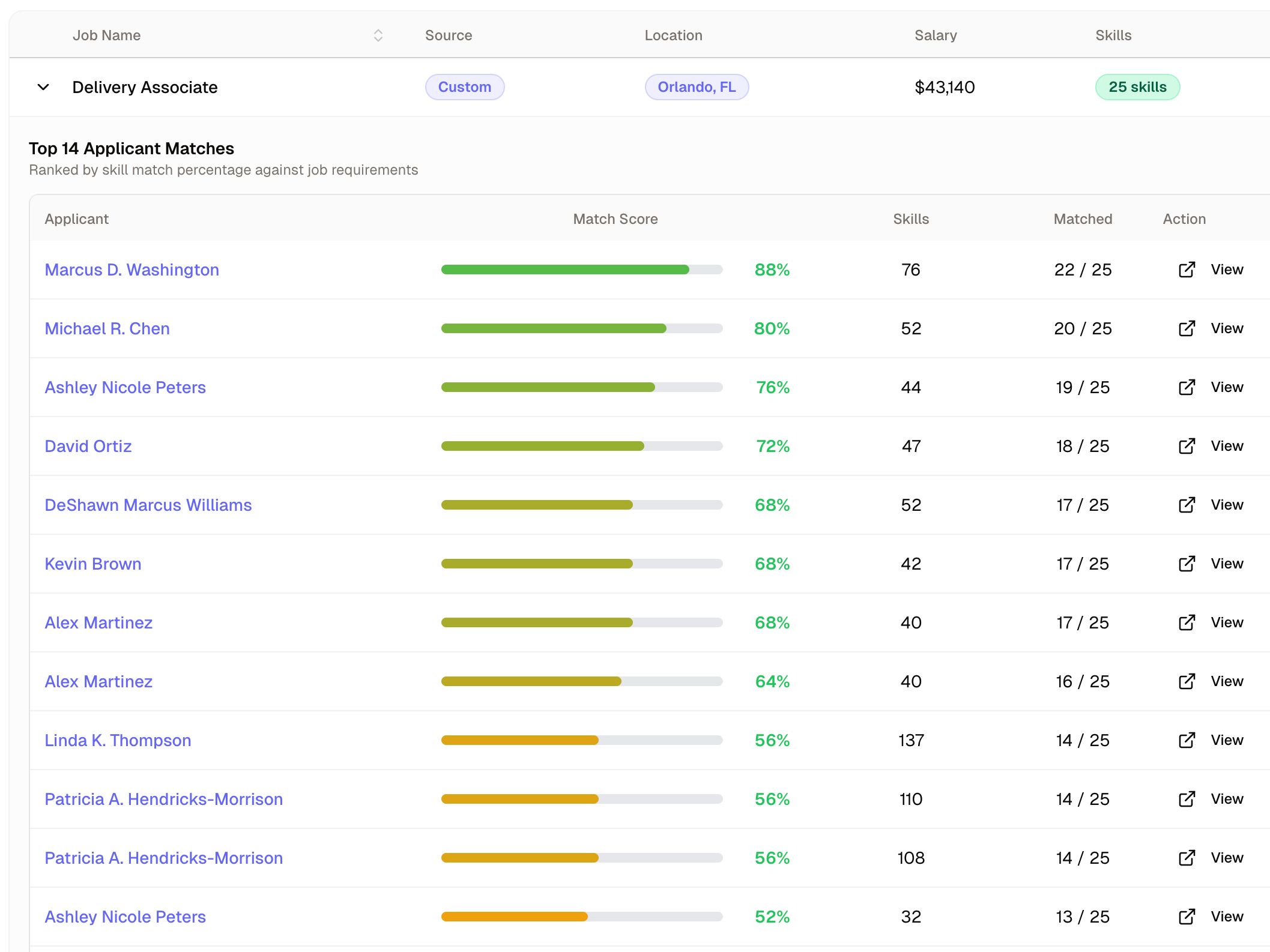
Stop the Costly Trial-and-Error Approach to Talent Acquisition
Business Services teams are often the first call when an employer struggles to fill an open position. The challenge is not only finding candidates — it’s understanding whether the role itself aligns with the local market.
Business Services representative
Meeting with an employer trying to understand why a role remains unfilled.
“A job description with detailed requirements, limited qualified applicants, and uncertainty about whether expectations and wages reflect the local talent market.”
- Review the job description and required qualifications
- Assess whether requirements are realistic for the region
- Evaluate if the wage is competitive locally
- Examine available local talent supply
- Identify adjustments that could expand the candidate pool
Writing Job Descriptions in the Dark is Costing You Top Talent
Job descriptions are written in free text and wage ranges are set internally. There is no structured way to compare role requirements against local talent supply, market wages, or adjacent skill pools before the role is posted.
- Role requirements are not evaluated against actual local talent supply
- Wage ranges are set without clear local benchmarking
- Job descriptions lack structured skill definitions
- Candidate screening depends on keyword matches rather than skills alignment
- Business Services teams lack a consistent framework to advise employers pre-posting
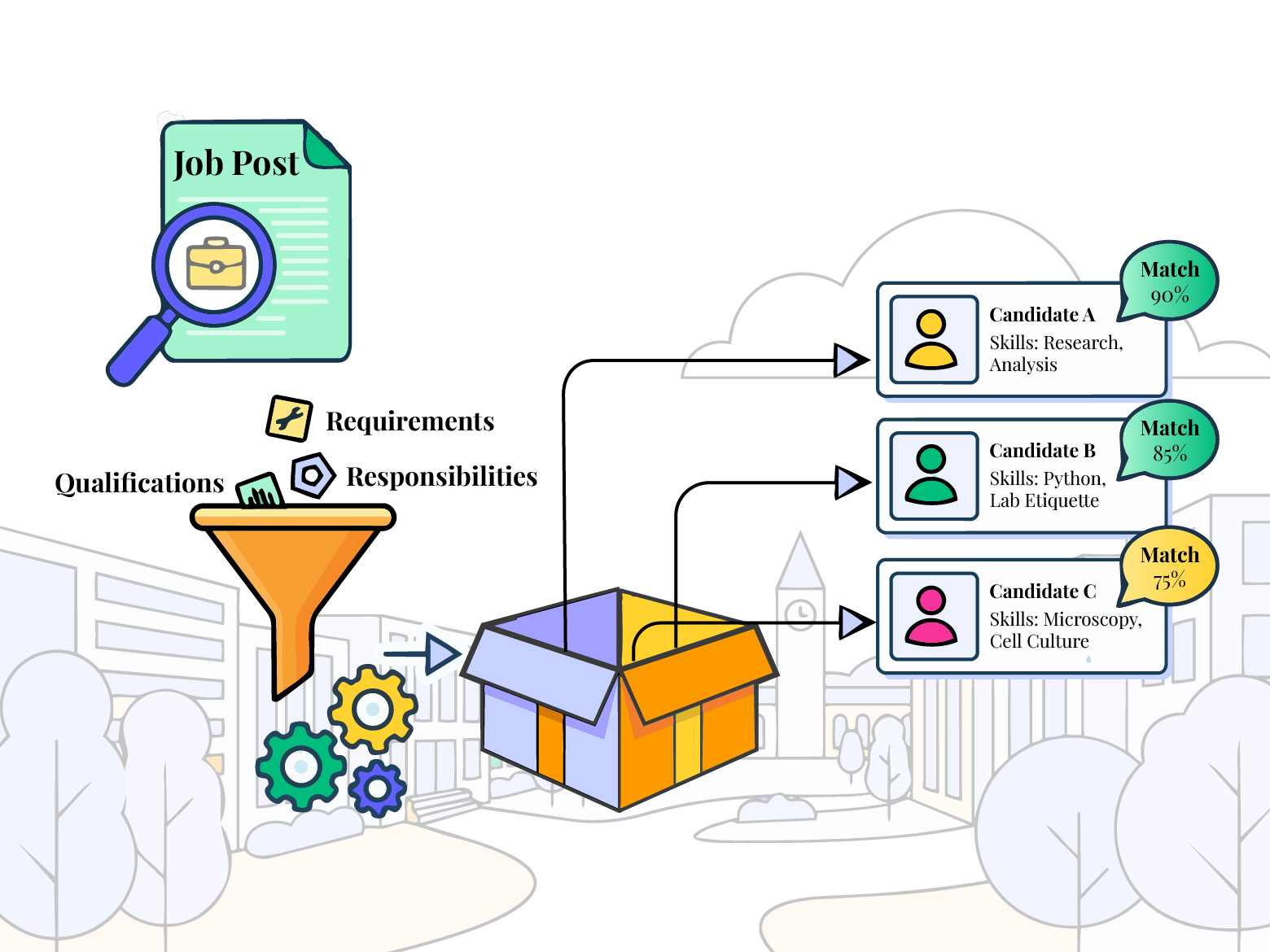
Precision Calibration: Align Every Role with Real-Time Market Reality
Mapademics translates job descriptions into skills and benchmarks them against real local supply, wages, and candidate pools - so employers hire strategically, not reactively.
Translate the job into skills
Free-text job descriptions are structured into normalized skill requirements.
Job-to-skills extraction and normalization
The role becomes measurable and comparable instead of descriptive.
Benchmark against local supply
Role requirements are evaluated against the actual local talent pool.
Skills-based talent supply analysis
Employers see whether the requirements match available talent before posting.
Benchmark wages against the market
Wage ranges are compared to real regional market benchmarks.
Local wage and demand benchmarking
Compensation decisions become data-informed rather than assumption-based.
Surface qualified local candidates
Structured skills are matched to available candidate profiles in the region.
Skills-based candidate matching
Employers see who is realistically available before refining the role.
Adjust strategically
Employers can modify requirements or wages to expand the candidate pool.
Scenario-based hiring strategy insights
Hiring becomes proactive and strategic - not trial and error.
An employer hiring dashboard they can use before the role goes live.
Each employer receives a skills-based view of their role, local talent supply, wage benchmarks, and candidate matches - so they can calibrate requirements before hiring.
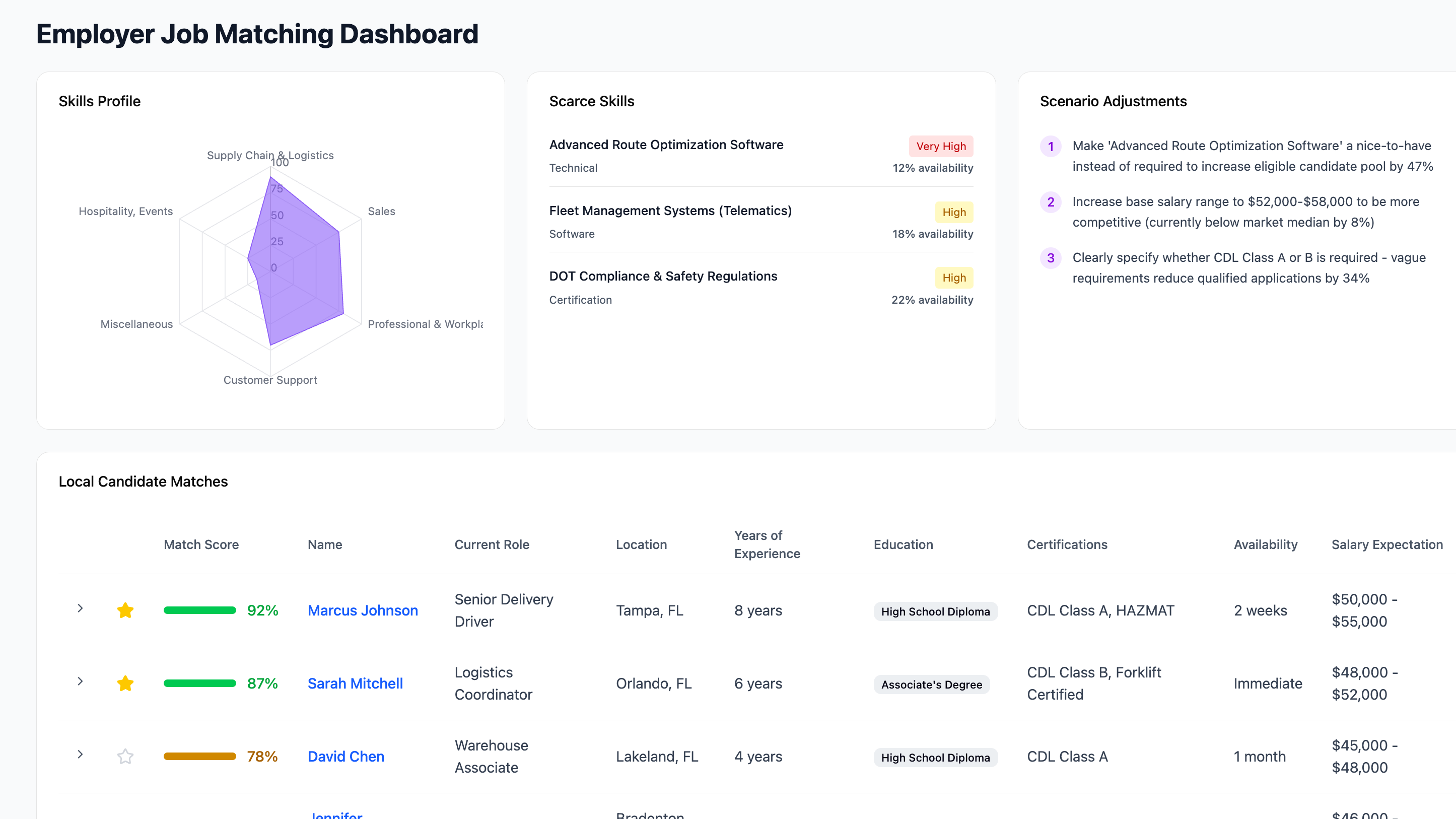
- 1Structured Skill Requirements
Free-text job description translated into normalized skills.
- 2Scarce Skills
See what skills are most scarce in the local talent pool
- 3Scenario Adjustments
See how modifying requirements expands or narrows the candidate pool.
- 4Local Talent Supply
Real-time view of available candidates with explainable match scores.
Powered by the Mapademics skills platform.
Behind the employer hiring dashboard is a skills infrastructure that translates job descriptions, benchmarks market conditions, and matches real local talent with explainable precision.
Skills Extraction & Translation
Turn unstructured job descriptions into normalized, comparable skill requirements.
Skills Extraction & TranslationMatching & Alignment
Benchmark role requirements against local talent supply with explainable skills alignment.
Matching & AlignmentLabor Market Intelligence
Compare wages, demand, and growth signals to ensure roles are competitive in the region.
Labor Market IntelligenceEmployer Talent Matching
Deliver an employer-facing hiring dashboard that supports strategic, data-backed hiring decisions.
Employer Talent MatchingHelp employers hire smarter - before the role goes live.
Bring one open job description. We’ll show you how to benchmark it against local talent supply, wage competitiveness, and real candidate availability.