
Turn Resumes Into Job Matches Using Skills
Turn a candidate’s experience into a clear skills profile, show real local job matches with explainable fit, and provide concrete steps to strengthen their career readiness.
- Clear skills profile from any background
- Real local job matches with transparent fit and gaps
- Actionable resume feedback to improve screening outcomes
- Highlight transitional skills for career pivots
- Targeted upskilling paths tied to live demand
How do we help this candidate move forward - today?
Workforce teams are not evaluating resumes for curiosity. They are trying to help real people get hired, pivot, and improve their earning potential quickly.
Workforce board staff member or career coach
Sitting with a jobseeker who needs clearer direction and better job prospects.
“A resume with mixed experience, unclear positioning, and uncertainty about which roles are realistic fits in the local market.”
- Identify what skills the candidate actually has
- Determine which local jobs are realistic fits
- Explain why they are or are not a strong match
- Suggest resume improvements to improve screening outcomes
- Recommend specific upskilling steps to close gaps
Matching candidates to jobs is manual, inconsistent, and hard to scale.
Resumes are unstructured. Job postings change constantly. Screening filters vary by employer. Without translating both the candidate and the market into skills, support decisions rely on interpretation, disconnected tools, and individual judgment.
- Resumes are reviewed manually and interpreted differently by each staff member
- Job fit is judged without a consistent, comparable framework
- Resume feedback is generic rather than role-specific
- Career pivot advice depends on personal experience rather than data
- Upskilling recommendations are not directly tied to local demand
Increase placement rates with a fast, explainable skills-based flow.
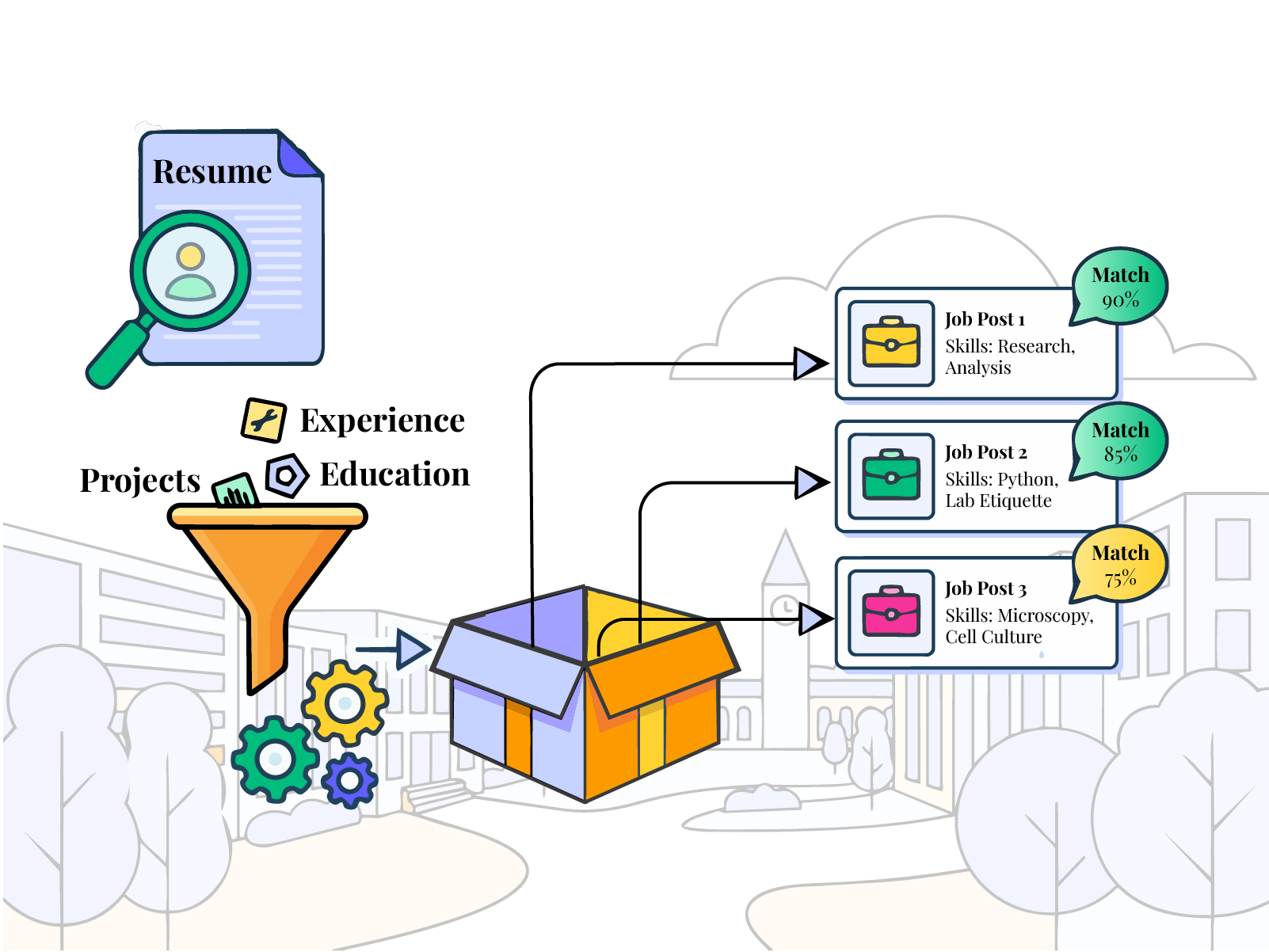
Mapademics translates a candidate’s experience and the local job market into skills - so matching, feedback, pivots, and upskilling lead to measurable outcomes.
Extract skills from the resume
A resume is translated into a structured skills profile that reflects what the candidate can actually do.
Resume-to-skills extraction and normalization
You stop guessing from job titles and start working from verified skills.
Strengthen screening readiness
The candidate receives role-targeted feedback to improve clarity, relevance, and screening outcomes.
Actionable resume feedback by target role
Resume support becomes role-specific and outcome-driven, not generic advice.
Match to real local jobs
The candidate’s skills are matched to active local job postings using live job intelligence.
Skills-based matching to live job postings
Matching reflects the real market right now, not static job lists.
Make fit explainable
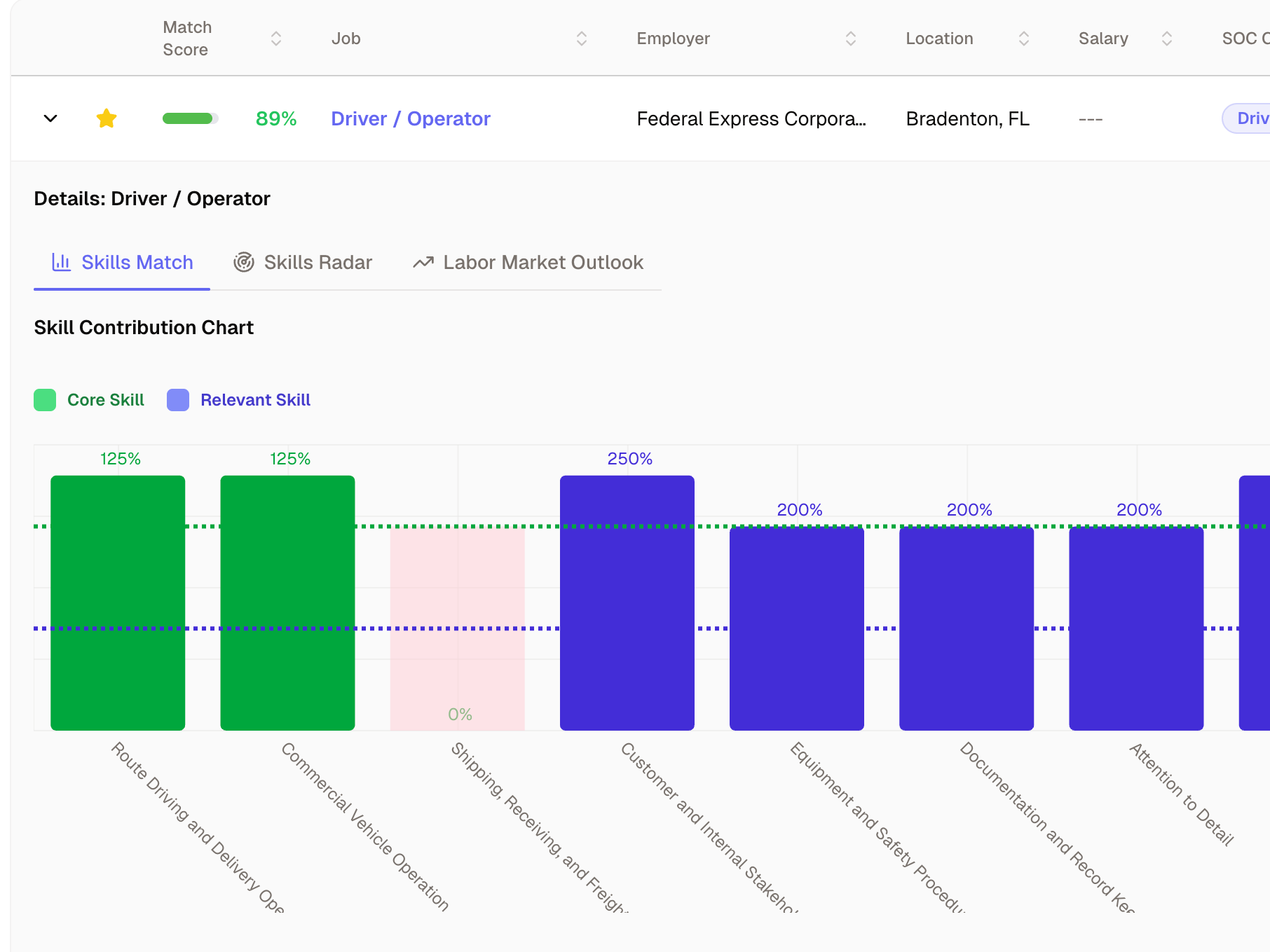
For each match, Mapademics shows why the candidate fits and what skills are missing.
Explainable fit and gap breakdown
Career guidance becomes explainable and repeatable - not dependent on gut judgment.
Reveal pivots and upskilling paths
Mapademics identifies adjacent roles where the candidate’s transitional skills apply, and suggests clear steps to close gaps.
Career pivots and demand-tied upskilling pathways
Candidates leave with a concrete path forward - improving placement outcomes across your program.
A candidate dashboard they can use, and you can stand behind.
Each jobseeker receives a live job dashboard showing their strengths, local job matches, fit explanations, and clear steps to improve - accessible anytime, anywhere.
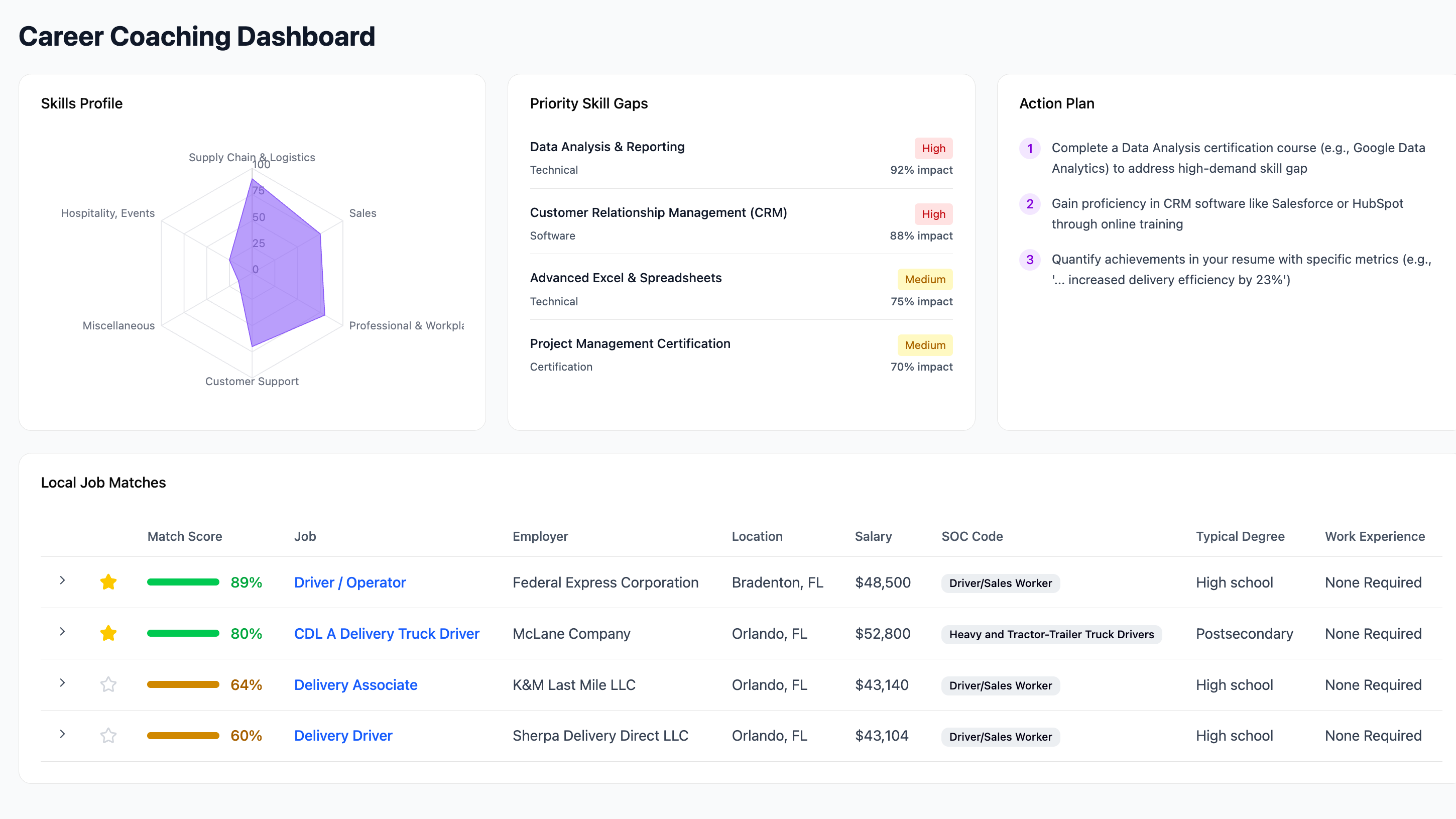
- 1Personal Skills Profile
Structured skills extracted from their resume and updated as they improve.
- 2Priority Skill Gaps
Which skills most impact their competitiveness right now.
- 3Action Plan
Targeted upskilling steps tied to higher-demand roles and wages.
- 4Live Local Job Matches
Ranked active postings matched to their skills in real time.
Powered by the Mapademics skills platform.
Behind the candidate dashboard is a skills infrastructure that translates resumes and live job data into measurable placement outcomes.
Skills Extraction & Translation
Turn unstructured resumes into normalized, comparable skills profiles.
Skills Extraction & TranslationMatching & Alignment
Match candidate skills to role requirements with explainable fit and gap breakdowns.
Matching & AlignmentLive Job Intelligence
Anchor matches in active local job postings and real-time market demand.
Live Job IntelligenceCandidate Skills & Career Matching
Deliver an end-to-end candidate experience that drives measurable placement gains.
Candidate Skills & Career MatchingIncrease placement rates with a skills-based candidate flow.
Bring one candidate profile and your local job market. We’ll show you how skills-based matching, explainable fit, and targeted upskilling can improve measurable outcomes.